
You want a brighter smile in Hollywood, FL, and you deserve straightforward options that match your lifestyle and comfort level. Professional in-office whitening and custom take-home kits from trusted Hollywood dentists deliver faster, safer, and longer-lasting results than most over-the-counter products.
They explain how whitening works, compare clinic treatments with at-home alternatives, and guide you through managing sensitivity and keeping your smile bright. Expect clear steps for choosing a local dental team, what to expect during treatment, and simple maintenance tips so you can move forward with confidence.
Understanding Teeth Whitening
Teeth whitening removes or reduces discoloration to create a brighter smile. It involves chemical bleaching or physical removal of stains and varies by cause, speed, and longevity.
How Teeth Stains Develop
Stains form from two main sources: extrinsic and intrinsic. Extrinsic stains sit on enamel and come from coffee, tea, red wine, tobacco, and colored foods. These respond well to professional cleanings and surface whitening treatments.
Intrinsic stains occur inside the tooth and result from aging, trauma, certain medications (like tetracycline taken in childhood), excessive fluoride during tooth development, or root canal treatment. These respond less predictably to over‑the‑counter whiteners and often need stronger in‑office bleaching, internal bleaching, or veneers for uniform results.
Enamel thickness and natural tooth color affect how visible stains appear. Thinner enamel exposes more dentin, which is yellower, so whitening may need multiple sessions to reach the desired shade.
Who Makes a Good Candidate
Good candidates have healthy teeth and gums, visible extrinsic or mild intrinsic staining, and realistic expectations. A dental exam must confirm there is no active decay, gum disease, or cracked teeth before starting bleaching.
People with hypersensitive teeth, large restorations, or very dark intrinsic stains may need alternative approaches like desensitizing protocols, staged bleaching, or porcelain veneers. Pregnant or breastfeeding patients are generally advised to postpone elective whitening until after pregnancy and nursing.
Patients with composite fillings, crowns, or veneers should know restorations do not whiten. Dentists evaluate restorations and discuss matching or replacing them after whitening to achieve an even appearance.
Professional Whitening Options in Hollywood, FL
Patients in Hollywood, FL can choose between fast in-office procedures and customized take-home systems that balance convenience with professional oversight. Both approaches use higher-strength bleaching agents than over-the-counter products and focus on safety, sensitivity management, and predictable results.
In-Office Whitening Treatments
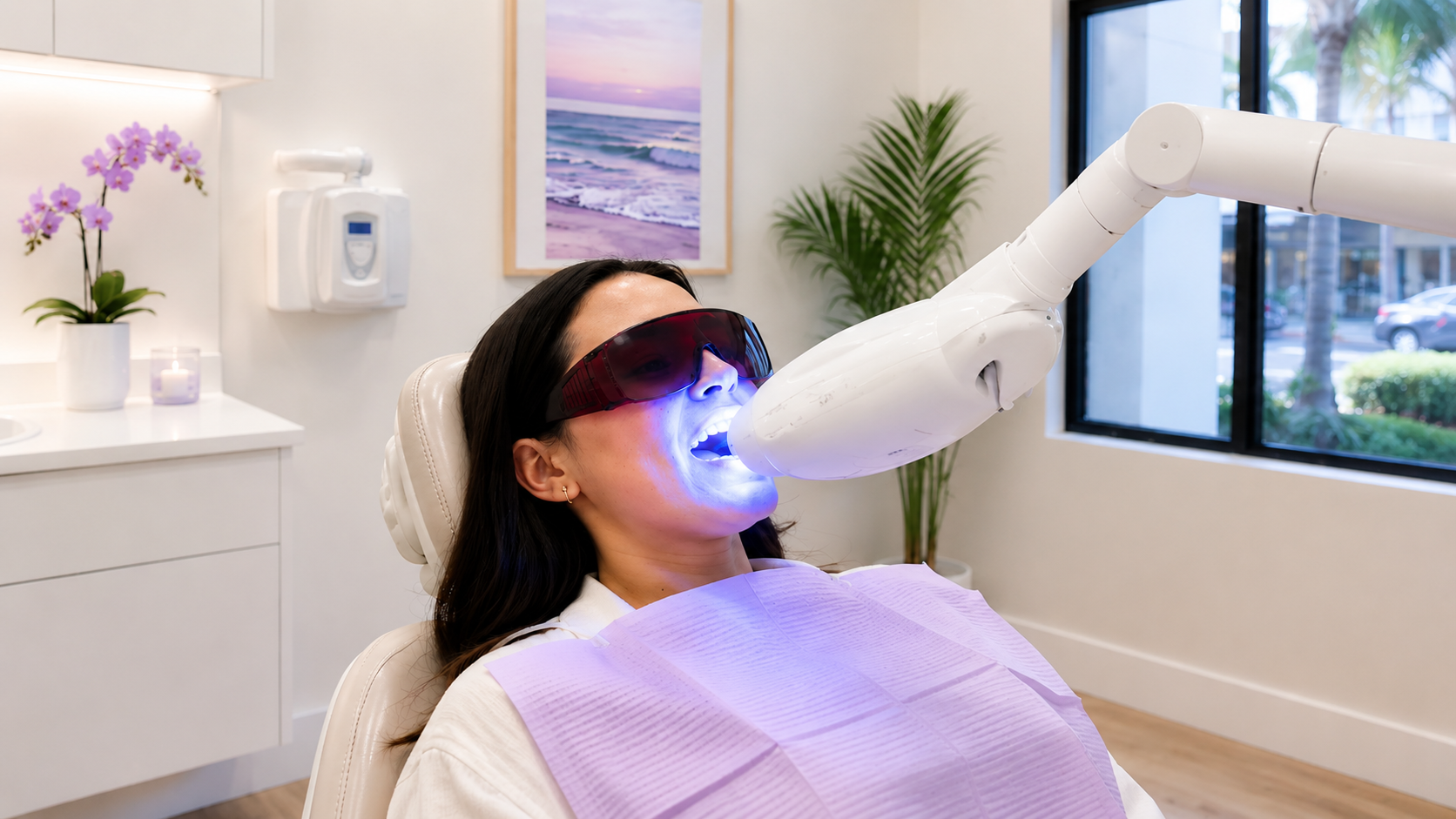
In-office whitening uses a concentrated hydrogen peroxide or carbamide peroxide gel applied and activated by light or heat for one to two visits. Dentist-supervised sessions typically deliver 6–8 shades of improvement in 45–90 minutes, depending on the system and starting shade.
A protective rubber dam or cheek retractor shields gums and soft tissue while the clinician monitors sensitivity. Dentists adjust concentration and exposure time for patients with thin enamel or prior sensitivity history to reduce discomfort.
Common branded systems include Zoom, Philips Zoom WhiteSpeed, and BriteSmile, but many practices also use professional-strength gels without lights. Costs vary by practice; most offices provide financing or bundled hygiene-plus-whitening packages.
Custom Take-Home Kits
Custom take-home kits start with digital impressions or a physical mold to fabricate precisely fitting trays that hold lower-concentration bleaching gel against teeth. Patients wear trays for 30 minutes to several hours daily, or overnight depending on the prescribed formulation, for one to two weeks.
Because trays fit tightly, gel contact is uniform, improving results and reducing gum irritation compared with store-bought strips. Dentists supply carbamide peroxide concentrations typically between 10–22% or hydrogen peroxide equivalents, tailoring strength to sensitivity and desired speed.
Follow-up visits let the clinician measure shade changes, advise on managing sensitivity with desensitizing toothpaste or potassium nitrate gels, and recommend maintenance touch-ups every 6–12 months to preserve results.
Comparing At-Home and Professional Solutions
At-home kits and in-office treatments differ mainly in concentration, supervision, and expected timelines. Patients should weigh convenience, cost, and oral health needs when choosing between them.
Safety and Effectiveness
Professional whitening performed in a dental office uses higher-concentration peroxide gels and chairside monitoring. Dentists apply protective barriers, adjust exposure time, and manage sensitivity, which reduces the risk of gum irritation and uneven whitening. For patients with existing restorations, enamel defects, or gum disease, the dentist evaluates suitability first and may recommend alternatives like staged treatments or treating underlying issues before whitening.
Over-the-counter kits and mail-order trays use lower peroxide levels and lack clinical oversight. These can be effective for mild surface stains but pose higher risk of misuse—over-application, ill-fitting trays, and prolonged wear increase gum contact and sensitivity. Custom take-home trays provided by a dentist bridge the gap: they use moderate peroxide under professional guidance, offering safer results than generic OTC products while being more convenient than chairside sessions.
Typical Results and Longevity
In-office whitening often produces immediate, noticeable lightening—commonly 4–8 shades in a single visit depending on the product and tooth baseline. Results appear faster because of higher peroxide concentration and auxiliary activation methods. Longevity varies: lifestyle factors like coffee, red wine, and tobacco will re-stain teeth; touch-up treatments or dentist-supplied maintenance trays can extend results for 12–24 months.
At-home OTC products typically yield subtler improvement over weeks, often 1–3 shades, and require consistent daily use. Custom dental trays with professional-grade gel deliver intermediate outcomes—clearer improvement than OTC but usually slower than in-office sessions. All methods are temporary; patients who prioritize rapid, dramatic change should consider professional chairside whitening, while those seeking gradual cost-effective brightening may prefer guided home systems.
Navigating the Whitening Process
Patients typically undergo a brief consultation, an in-office appointment that lasts 45–90 minutes, and receive clear before-and-after care instructions to manage sensitivity and maintain results.
What to Expect During Your Appointment
The clinician begins with a dental exam to check for cavities, gum disease, or exposed roots that could increase sensitivity. They will take photos and possibly a shade measurement to document starting color and set realistic goals.
Next comes isolation of soft tissues using a cheek retractor and protective gel or a rubber dam to shield lips and gums. A professional-strength hydrogen peroxide or carbamide peroxide gel is applied to the teeth in controlled layers.
Most offices use a light or heat-accelerated device for 15–20 minute cycles; patients typically experience a mild tingling or pressure but no sharp pain. Total chair time ranges from 45 to 90 minutes depending on the protocol and number of cycles.
Technicians rinse and re-evaluate shade between cycles, adjusting gel concentration or skipping additional cycles if sensitivity increases. Before leaving, the clinician provides post-treatment instructions and may give a touch-up kit or schedule follow-up if needed.
Before and Aftercare Tips
Avoid staining foods and drinks for 48–72 hours after treatment: coffee, red wine, dark sodas, tomato sauces, and colored spices. If a staining beverage is unavoidable, use a straw and rinse with water immediately.
Manage sensitivity with desensitizing toothpaste containing potassium nitrate, applied twice daily starting 48 hours before the appointment and continued for up to two weeks after. Over-the-counter ibuprofen can help short-term discomfort, but consult the clinic if pain persists.
Do not smoke for at least 48 hours post-treatment; tobacco accelerates re-staining and delays enamel recovery. Maintain regular brushing with a soft-bristled brush and schedule professional cleanings every six months to prolong whitening results.
For long-term maintenance, the clinic may recommend at-home touch-up trays or annual in-office sessions. Patients with dental restorations should discuss expectations because crowns and veneers do not whiten and may need replacement to match new tooth shade.
Managing Sensitivity and Side Effects
Patients can expect temporary tooth or gum sensitivity after whitening, and most side effects are mild when treatments follow professional guidance. Simple steps before, during, and after treatment reduce risk and keep results comfortable.
Reducing Sensitivity Risk
Use a dentist-prescribed approach: in-office power whitening with protective barriers or custom take-home trays with lower-concentration gel reduces soft-tissue exposure compared with over-the-counter strips. Dentists often apply a desensitizing agent (5% potassium nitrate or fluoride varnish) immediately before or after treatment to block nerve transmission and strengthen enamel.
Suggest spacing treatments: no more than once every two weeks for take-home sessions and only as recommended for in-office boosters. Encourage patients to avoid highly acidic foods and hot or cold beverages for 24–48 hours after whitening to minimize nerve stimulation.
Recommend sensitivity toothpaste: twice-daily brushing with a potassium nitrate or stannous fluoride desensitizing toothpaste beginning at least two weeks before whitening and continuing for 2–4 weeks after can significantly lower discomfort. If sensitivity persists beyond a week, advise contacting the dental office for possible modification of the regimen.
Addressing Common Concerns
Gum irritation usually results from gel contact or poor-fitting trays. A quick remedy is rinsing thoroughly and applying a small amount of topical fluoride or aloe vera gel; long-term prevention involves proper tray fit or using a lower-concentration gel under supervision.
Uneven whitening and spotty results often stem from existing restorations (crowns, veneers, composite fillings). Whitening will not change the color of these materials, so dentists should evaluate restorations beforehand and discuss replacement or alternative cosmetic options if color match is important.
Rarely, patients worry about enamel damage. Modern, professionally supervised whitening uses controlled peroxide levels and application times to avoid demineralization. If enamel erosion risk exists, clinicians recommend remineralizing treatments—fluoride trays or casein phosphopeptide–amorphous calcium phosphate (CPP-ACP)—before proceeding.
Questions or persistent issues should prompt a consultation. The dentist can adjust concentration, change tray fit, or suggest alternative cosmetic treatments to balance comfort and appearance.
Maintaining Your New Smile
Consistent care and small daily choices preserve whitening results and protect enamel. Practical habits, mindful eating, and periodic touch-ups keep teeth bright without unnecessary risk.
Everyday Habits to Keep Teeth Bright
They should brush twice daily with a soft-bristled brush and fluoride toothpaste, using gentle circular motions for two minutes to remove surface stains without wearing enamel. Floss once daily and use an interdental brush if spaces are tight to prevent stain-causing plaque between teeth.
A whitening toothpaste can help maintain brightness, but it should not replace professional follow-ups; use it intermittently and choose products with the ADA Seal when possible. They should rinse with water after consuming staining foods or drinks to reduce pigment adherence.
For longer-term care, schedule a professional cleaning every 6 months or as recommended; hygienist cleanings remove stubborn surface buildup that home care misses. If sensitivity occurs after whitening, avoid very hot or cold foods for a few days and use a desensitizing toothpaste until comfort returns.
Foods and Drinks to Avoid
They should limit high-staining beverages: coffee, black tea, red wine, cola, and dark fruit juices stain enamel quickly. Drink these through a straw when possible and follow with water to dilute pigments.
Acidic foods and drinks—citrus, soda, and sports drinks—soften enamel, making it more prone to staining; avoid frequent sipping and wait 30–60 minutes before brushing to prevent abrasion.
Strongly colored sauces (soy sauce, tomato sauce, curry) and berries can also discolor; rinse or brush soon after eating. For special occasions, accept temporary staining or plan a touch-up appointment rather than changing regular diet drastically.
Choosing the Right Dental Team in Hollywood, FL
Look for a dental team that combines clinical skill, clear communication, and patient-centered care. Priority should go to providers who use evidence-based whitening methods, explain risks and expected results, and provide follow-up support.
What to Look for in a Provider
Patients should choose a licensed dentist with specific experience in in-office and take-home whitening. Verify DDS or DMD credentials and ask how many whitening cases the office handles monthly to gauge practical experience.
Modern equipment and safe bleaching agents matter. Look for offices that use LED or laser adjuncts only with appropriate peroxide concentrations and provide protective measures for gums and restorations. Confirm they assess tooth sensitivity risk and document baseline shade with standardized photographs.
A comfortable office environment helps reduce anxiety. Check patient reviews for comments about chairside manner, appointment punctuality, and post-treatment support. Also confirm the practice coordinates whitening with cosmetic treatments like veneers to avoid shade mismatch.
Questions to Ask at Your Consultation
Ask: “Which whitening method do you recommend for my enamel and restorations, and why?” This reveals whether the plan suits natural teeth and existing crowns or fillings. Request to see before-and-after photos of similar cases.
Clarify safety and side effects by asking: “What is the expected sensitivity, and how will you manage it?” A good team offers desensitizing gels, modified protocols, or staged treatments for sensitive patients.
Discuss costs and timelines. Ask for a written estimate covering initial treatment, any take-home trays or maintenance gels, and potential touch-ups. Also confirm what follow-up visits are included.
Finally, ask about warranty or satisfaction policies: “If I’m unhappy with the shade after treatment, what are my options?” Transparent policies and clear communication reduce surprises and build trust.
Next Steps Toward a Brighter Smile
They should schedule a consultation with a trusted Hollywood, FL dental practice to review whitening options and dental history. A short exam identifies stains, restorations, and any sensitivity that could affect treatment choice.
The dentist will explain professional in-office whitening, take-home trays, and safe over-the-counter alternatives. Each option includes expected results, treatment time, and possible side effects in clear, simple terms.
Patients can prepare by jotting down questions and noting habits like coffee, wine, or tobacco use. Bringing photos of desired results helps the dental team set realistic expectations and tailor a plan.
Consider this quick checklist before the visit:
- Bring medical and dental history
- List current medications
- Note tooth sensitivity or restorations
- Mention cosmetic goals
Post-treatment care matters. The dentist will recommend preventive steps such as desensitizing toothpaste, avoiding staining foods for a short period, and scheduling touch-ups if needed.
If they have concerns about cost or scheduling, the office staff can discuss payment options and timing. Encourage them to call or book online to get personalized guidance and begin the whitening process.
Frequently Asked Questions
This section answers practical concerns about cost, effectiveness, duration, sensitivity, stain removal, and suitability with existing dental work. It focuses on typical price ranges, comparative results for in-office versus take-home treatments, maintenance tips, sensitivity management, stain expectations, and how restorations affect whitening.
How much does professional teeth whitening typically cost, and what factors can change the price?
Professional in-office whitening in Hollywood, FL typically ranges from $300 to $800 per session. Prices vary with the clinic’s experience, the whitening system used, and whether advanced light/laser adjuncts are included.
Take-home custom tray systems usually cost between $200 and $400, depending on materials and number of gel syringes. Additional factors that change price include pre-treatment (cleaning, x-rays), follow-up visits, and any required repairs to existing restorations.
Insurance rarely covers cosmetic whitening, so patients should plan for out-of-pocket payment or ask about financing and specials. Some practices bundle initial in-office plus take-home maintenance, which affects overall cost.
Is in-office whitening more effective than take-home trays, and which option is best for my goals?
In-office whitening produces faster, more dramatic lightening because stronger peroxide concentrations and professional techniques accelerate results. It suits patients who need a significant change quickly for events or major discoloration.
Take-home trays deliver more gradual, controllable whitening and work well for sensitive patients or those who prefer convenience. They also serve as maintenance after an in-office boost.
A dentist will recommend the best option based on stain type, tooth sensitivity, desired speed of results, and budget.
How long will my whitening results last, and what can I do day-to-day to keep my smile bright?
Results commonly last 6 months to 3 years, with many patients needing touch-ups every 6–12 months. Longevity depends on diet, smoking, oral hygiene, and genetics.
Daily habits like brushing twice daily with a non-abrasive toothpaste, flossing, and rinsing after staining foods extend results. Using touch-up gel in custom trays or occasional in-office boosters helps maintain shade.
Regular professional cleanings remove surface buildup that can dull whitening over time.
Will teeth whitening cause sensitivity, and how can you keep me comfortable during and after treatment?
Mild, temporary sensitivity affects many patients, especially with higher-concentration in-office gels. Sensitivity typically peaks within 24–48 hours and resolves within a week.
Dentists reduce discomfort by using desensitizing gels, potassium nitrate toothpaste before treatment, shorter application times, or lower-concentration protocols. Post-treatment recommendations include desensitizing toothpaste and avoiding very hot or cold foods for a day or two.
Patients with severe baseline sensitivity may be steered toward gradual take-home treatments or alternative cosmetic options.
Can whitening remove stains from coffee, tea, wine, or smoking, and how many sessions might I need?
Whitening effectively lightens extrinsic stains from coffee, tea, wine, and smoking, but results vary by stain depth and frequency of exposure. Superficial staining often improves significantly after one in-office session or a two-week course of take-home gel.
Deep, long-standing, or tobacco stains may need multiple sessions or a combination of in-office and take-home treatments. Stains caused by certain medications or intrinsic discoloration respond less predictably and may require restorative options like veneers.
Consistent staining habits will shorten the time between maintenance treatments.
Am I a good candidate for whitening if I have crowns, veneers, fillings, or older dental work in my front teeth?
Whitening whitens natural tooth structure only; it does not change the shade of crowns, veneers, or most composite fillings. Restorations that already match discolored teeth will remain their original color after bleaching.
Patients with visible restorations should consult a dentist to plan whitening first, then replace or refinish restorations to match the new shade. For extensive restorations, direct cosmetic replacement or veneers may be the better path.
A dental exam will identify which restorations will need attention and produce a realistic treatment plan and timeline.